

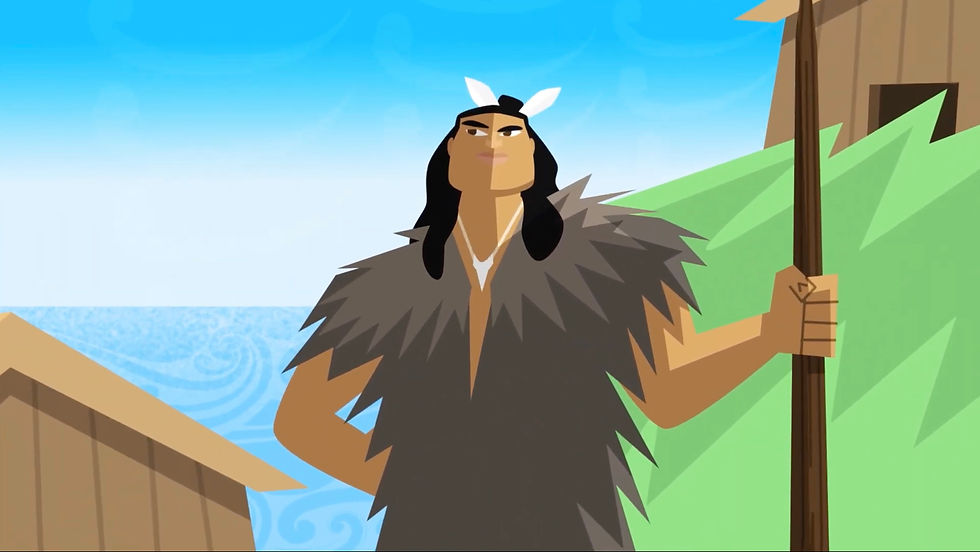
Hō. 2: Tapatapawhenua
Nā Ngāti Kurī te hekenga nui a Ngāi Tahu ki Te Waipounamu i kōkiri, i tūturu te noho ki Kaikōura i raro i te mana o te rangatira a Marukaitātea. I tautaia wā, tokomaha ngā rangatira o Ngāti Kuri, o Ngāi Tūhaitara i noho atu ki Kaikōura. I whakaāe katoa ko Maru te mana, engari he mana rangatira tonu ō rātou i hiahia hoki i ō rātou ake whenua. Nei te kōrero mō te rapa whenua a Makō rātou ko Te Rakiwhakaputa, ko Te Ruahikihiki.
Hōtaka 2. Tapatapawhenua
Te Reo Māori
Ep. 2: Tapatapawhenua
Ngāti Kurī led the Ngāi Tahu migration to Te Waipounamu and they established themselves at Kaikōura under their rangatira, (chief) Marukaitātea. There were many chiefs of Ngāti Kurī and Ngāi Tūhaitara and all were looking for the right locations to establish settlements of their own. This is the story of how Ngāti Kurī chiefs Makō, Te Rakiwhakaputa and Te Ruahikihiki claimed lands for their people.
Episode 2. Tapatapawhenua
English
Hō. 3: He Iti Matā
E hia kē nei ngā iwi i noho atu ki Te Whanganui a Tara i roto i ngā tau. Ko Ngāti Kurī tētahi. Ko ētahi iwi ka noho tangata whenua atu, ko ētahi ka noho hōpuni ka rere noa i te tai timu. Ko tēnei te pūrākau e pā ana ki a Te Rākaitauheke me āna mahi mātātoa. Ka tutū te puehu, ka hinga tētahi, ka toa tētahi atu. Ko wai ka tohu, ko wai ka hua? Mātaki mai.
Hōtaka 3. He Iti. Matā
Te Reo Māori
Ep. 3: He Iti Matā
This episode depicts the story of Te Rākaitauheke (Ngāti Kurī) and Tapu (Ngāti Kahungunu), who were known as rivals in Te Whanganui a Tara, the great harbour of Tara - unfortunately, the 'great harbour' wasn't big enough for the both of them. A lot of bad feelings had built up between them, to the point that one day, Te Rākaitauheke could no longer bear it. He started a fight that would have far-reaching consequences for him and his people.
Episode 3. He Iti Matā
English
Hō. 4: Pūharakeketapu
He rangatira nui a Marukaitātea nō roto o Ngāti Kurī. Nō Ngāti Kahungunu āna wāhine tokorua ko Te Waipūhā rāua ko Rongomaiwhāia. Ko te tikanga ia mā te tomo, mā te whakamoe ka whakakaha ake i ngā hononga o waenga i ngā iwi. Heoi anō he raru i puta i te whakamatenga o te whanaunga o Te Waipūhā rāua ko Rongomaiwhāia e te matua kēkē tonu o Maru. Kei huri a Ngāti Kahungunu ki te ngāki i tēnei o ngā matenga i tika atu a Maru ki te tiki atu i tōna whānau ake, ā, ko te oranga o tōna anō iwi i te aroaro.
Hōtaka 4. Pūharakeketapu
Te Reo Māori
Ep. 4: Pūharakeketapu
Marukaitātea was a prominent Ngāti Kurī chief. His wives, Te Waipūhā and Rongomaiwhāia were from Ngāti Kahungunu. Marriages helped build relationships and keep peace between different iwi. However, trouble arose when Maru’s uncle killed a relative of Te Waipūhā and Rongomaiwhāia. Fearful of retaliation from Ngāti Kahungunu, Maru risks everything to be reunited with his whānau and protect his people.
Episode 4. Pūharakeketapu
English
Hō. 5: Te Huataki
I Te Whanganui-a-Tara a Te Huataki e noho ana. Ko āna wāhine tokorua he tamāhine nā Tiotio, he ariki, he tohunga anō nō Ngāi Tahu. I a ia e hī ika ana i huri te hau, ā, ka tae kē te waka o Te Huataki ki Te Waipounamu. Ka pōwhiringa a ia e te iwi o reira, ka noho atu, ka moe wahine. Ka huri ngā rā, ka tūpono anō a Te Huataki ki te huringa hau i a ia e hī ika ana, ā, ka hoki kē ki Te Whanganui-a-Tara. I tana hokinga, ka māharahara ki te riri o tōna iwi mōna i pūrere atu. Heoi, i āna kōrero mō Te Waipounamu me te nui o ōna rawa ka piki kē te hīkaka o Tiotio mā.
Hōtaka 5. Te Huataki
Te Reo Māori
Ep. 5: Te Huataki
Te Huataki was living in Te Whanganui-a-Tara. He married the daughters of Tiotio, another prominent chief and tohunga. One day whilst out fishing Te Huataki got blown off course and ended up in Te Waipounamu. He was welcomed by the iwi there and married into the tribe. Time passed, and fate would intervene again, with another fishing trip going awry, sending Te Huataki back to Te Whanganui-a-Tara. On returning, he knew that he might not be welcome. But his tales of the rich resources to be found in Te Waipounamu thrilled Tiotio and others, sparking their interest in exploring this new land.
Episode 5. Te Huataki
English
Hō. 6: Pūraho
I Te Whanganui-a-Tara a Ngāti Kurī e noho ana, heoi he tūtakarerewa te noho. I te tutū te pūehu i waenga i a rātou me ētahi atu iwi. Nā Pūraho te whakatau kia hūnuku atu tōna rāhi, ā, i heke rātou ki te pā o Kaihinu, i Te Waipounamu noho ai. Heoi he rite tonu te tutūnga puehu i reira, ka tohe, ka puta. I riro mā te tama a Pūraho, mā Marukaitātea te ara ka whāia e Ngāti Kurī e whakatakoto.
Hōtaka 6. Pūraho
Te Reo Māori
Ep. 6: Pūraho
Ngāti Kurī were based in Te Whanganui-a-Tara but there were growing tensions emerging with neighbouring iwi. Pūraho led his people to find a new home, and they settled at Kaihinu Pā in Te Waipounamu. But tragedy and conflict would follow Ngāti Kurī. It was left to Marukaitātea the son of Pūraho to determine how Ngāti Kurī would respond.
Episode 6. Pūraho
English
Hō. 7: Hinerongo rāua ko Tūteurutira
Ka noho atu a Ngāti Kurī ki te pā o Kaihinu i Te Waipounamu, ka tū atu he riri ki a Rangitāne. Ka pāhuatia tētahi pā o Rangitāne. I reira ka mauheretia tētahi wahine, ko Hinerongo. Nāwai ka mōhio a Tūteurutira he wahine rangatira tērā nō roto o Ngāti Māmoe. I whakatau ia kia whakahoki atu a Hinerongo ki tōna anō iwi. I tū ngātahi atu a Tūteurutira ki a Ngāti Māmoe kia whai utu, he mōrearea engari i roto i ēnei mahi āpea ka tau mai he rangimarie, āpea he whakauru hou.
Hōtaka 7. Hinerongo rāua ko Tūteurutira
Te Reo Māori
Ep. 7: Hinerongo and Tūteurutira
After settling at Kaihinu Pā in Te Waipounamu, Ngāti Kurī faced conflict with Rangitāne. During a raid, they unknowingly captured Hinerongo, a Ngāti Māmoe woman from an important family. Realizing her true identity, Tūteurutira, a Ngāti Kurī chief, took her back to her people. He worked with them to take vengeance, a risky journey that turned into an opportunity for peace and alliances.
Episode 7. Hinerongo and Tūteurutira
English
Pūrākau Advisors
It is important to us to ensure that those holders of the mātauranga for the hapū and the iwi support the way we retell these pūrākau and that the authenticity of the story is protected.

Maurice Manawatu
Ngāi Tahu (Ngāti Kurī, Ngāti Hinematua)
Maurice hails from Kaikōura and for over 30 years has been sharing the stories of Ngāti Kurī with visitors to the region and with his own hapū. After the Kaikōura earthquake Maurice played the lead role in seeing the stories of the hapū being retold in artworks that now feature prominently on State Highway 1 along the Kaikōura coastline. He is now part of the Ngāi Tahu Archives team and leads a project which supports growing the knowledge of iwi members to tribal histories and pūrākau.

Joseph Hullen
Ngāi Tahu (Ngāi Tūāhuriri, Ngāti Hinematua)
Joseph has spent a lifetime gathering traditional kai and listening to the stories of his people of Ngāi Tūāhuriri. He is part of the Ngāi Tahu Whakapapa team charged with protecting the genealogical records of over 70,000 tribal members and their ancestors and works with whānau to help them understand their connections and histories. He represents his people on conservation boards, and local trusts which seek to restore native areas for traditional food gathering and post the Christchurch earthquake ensure that local narratives, histories and art informed the rebuild of the city’s central recovery plan.

Iaean Cranwell
Kāi Tahu (Kāti Makō, Kāti Irakehu, Kāti Kurī) Kāti Māmoe
Iaean is an advocate for the restoration of our natural spaces and places and currently represents the hapū of the Canterbury region as a manawhenua Expert on Environment Canterbury. Iaean has been deeply involved in the restoration efforts around Te Roto o Wairewa and its surrounds. He codeveloped Aoraki Bound, a course like Outward Bound but focused on helping young Māori engage with their natural environments. Iaean leads the efforts of his marae Wairewa in protecting and sharing Ngāti Makō, Ngāti Irakehu kōrero and histories with other hapū members and wider communities.
Ngā Haumi | Our Supporters:
Ka kore e ārikarika ngā mihi ki a rātou kua taunaki i tēnei o ngā kaupapa. To the sponsors and supporters of He Kōrero we thank you.


